
 Find a Wishlist
 Shop
Shop
 How It Works
 Advertise



2 Fans

Philodendron gloriosum
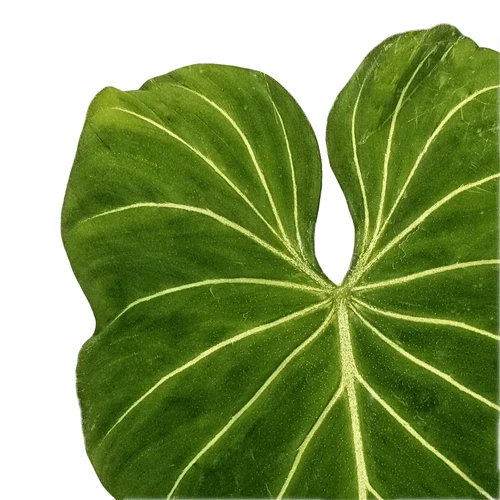
Philodendron gloriosum: not only does it grow large, cordate leaves, but also has georgeous texture, almost velvety leaf blades and contrasting veins. Philodendron gloriosum Andre is one of the favourite aroids of the plant community. A must-have between plant collectors, one of the essential Philodendron species in every plant collection. And rightly so, because the appeal of this plant never lessens: Philodendron gloriosum is a stunning, soft-leaved aroid with a terrestrial habit. Its leaves have a velutinous appearance and feel, and the contrasting venation is one of the characteristic qualities of this beautiful aroid.. Stem of Philodendron gloriosum is repent, creeping. Petioles are green in the lower part; upper part, midrib and primary lateral veins reddish, marked with longitudinal white striations, semiterete. Leaf blades thinly herbaceous, on the upper side the midrib and primary veins are pale and the margin is reddish, otherwise deep green, pale below, cordate-ovate.Philodendron gloriosum is not difficult to care for and can be grown easily at home, however, if you want your plant to achieve the very desirable, large leaf sizes, it should be grown in relatively high air humidity to thrive - starting at 60%. It should also be provided with ample light conditions - remember that any indoor light is still less light than what these plants receive in their natural conditions. Also, before you add a plant to your collection, you should know that, like other Philodendron plant species, Philodendron gloriosum is toxic to pets and humans if consumed.Below you will find a short guide on how to care for Philodendron gloriosum:		Place the plant in a spot that receives dappled sunlight, not direct light.			The higher the air humidity, the better			Choose rich, organic, well-draining soil (Philodendron gloriosum does also very well in semi-hydro set-up with inorganic growing media, providing a regular and adequate fertilising schedule)			Waterings should be regular, this plant also enjoys foliage-feeding	 Most common problems with Philodendron gloriosum :		Browning leaves on Philodendron gloriosum:	Occasional brown leaves are usually nothing to worry about, but if your plant's leaves are turning brown quickly, there is likely a cause. If the entire leaf turns brown and dies, it may be due to too little water, dry conditions, or a lack of sunlight. If your plant develops crispy brown spots or edges, leaf scorch (too much sunlight) or too dry conditions (too little moisture) are likely the cause.		Yellowing leaves on Philodendron gloriosum::	Yellow leaves are also only a cause for concern if your plant develops several yellow leaves at the same time. This is usually due to too little water, too little light, too much water or a lack of nutrients (not enough fertiliser). Assess your plant's growing conditions to determine which is the most likely cause.Providing Philodendron gloriosum with extra moisture, light and using a vitamin solution with every watering and foliar feed can help to protect the delicate leaves as it adjusts to its new environment. Ultimately, it is normal for your plant to experience some stress. You may lose a few leaves along the way, but as long as you provide your plant with the right growing conditions, it should recover and produce beautiful new leaves for you in the future.From the Modern Latin genus name Philodendron (Schott, 1830), form Greek philodendron, neuter of philodendrons "loving trees," form philo- "loving" (see philo-) + dendron "tree" (form PIE *der-drew-, form root *deru- "to be firm, solid, steadfast," also forming words for "wood, tree"). The plant is so called because it clings to trees
Philodendron gloriosum: not only does it grow large, cordate leaves, but also has georgeous texture, almost velvety leaf blades and contrasting veins. Philodendron gloriosum Andre is one of the favourite aroids of the plant community. A must-have between plant collectors, one of the essential Philodendron species in every plant collection. And rightly so, because the appeal of this plant never lessens: Philodendron gloriosum is a stunning, soft-leaved aroid with a terrestrial habit. Its leaves have a velutinous appearance and feel, and the contrasting venation is one of the characteristic qualities of this beautiful aroid.. Stem of Philodendron gloriosum is repent, creeping. Petioles are green in the lower part; upper part, midrib and primary lateral veins reddish, marked with longitudinal white striations, semiterete. Leaf blades thinly herbaceous, on the upper side the midrib and primary veins are pale and the margin is reddish, otherwise deep green, pale below, cordate-ovate.Philodendron gloriosum is not difficult to care for and can be grown easily at home, however, if you want your plant to achieve the very desirable, large leaf sizes, it should be grown in relatively high air humidity to thrive - starting at 60%. It should also be provided with ample light conditions - remember that any indoor light is still less light than what these plants receive in their natural conditions. Also, before you add a plant to your collection, you should know that, like other Philodendron plant species, Philodendron gloriosum is toxic to pets and humans if consumed.Below you will find a short guide on how to care for Philodendron gloriosum:		Place the plant in a spot that receives dappled sunlight, not direct light.			The higher the air humidity, the better			Choose rich, organic, well-draining soil (Philodendron gloriosum does also very well in semi-hydro set-up with inorganic growing media, providing a regular and adequate fertilising schedule)			Waterings should be regular, this plant also enjoys foliage-feeding	 Most common problems with Philodendron gloriosum :		Browning leaves on Philodendron gloriosum:	Occasional brown leaves are usually nothing to worry about, but if your plant's leaves are turning brown quickly, there is likely a cause. If the entire leaf turns brown and dies, it may be due to too little water, dry conditions, or a lack of sunlight. If your plant develops crispy brown spots or edges, leaf scorch (too much sunlight) or too dry conditions (too little moisture) are likely the cause.		Yellowing leaves on Philodendron gloriosum::	Yellow leaves are also only a cause for concern if your plant develops several yellow leaves at the same time. This is usually due to too little water, too little light, too much water or a lack of nutrients (not enough fertiliser). Assess your plant's growing conditions to determine which is the most likely cause.Providing Philodendron gloriosum with extra moisture, light and using a vitamin solution with every watering and foliar feed can help to protect the delicate leaves as it adjusts to its new environment. Ultimately, it is normal for your plant to experience some stress. You may lose a few leaves along the way, but as long as you provide your plant with the right growing conditions, it should recover and produce beautiful new leaves for you in the future.From the Modern Latin genus name Philodendron (Schott, 1830), form Greek philodendron, neuter of philodendrons "loving trees," form philo- "loving" (see philo-) + dendron "tree" (form PIE *der-drew-, form root *deru- "to be firm, solid, steadfast," also forming words for "wood, tree"). The plant is so called because it clings to trees